
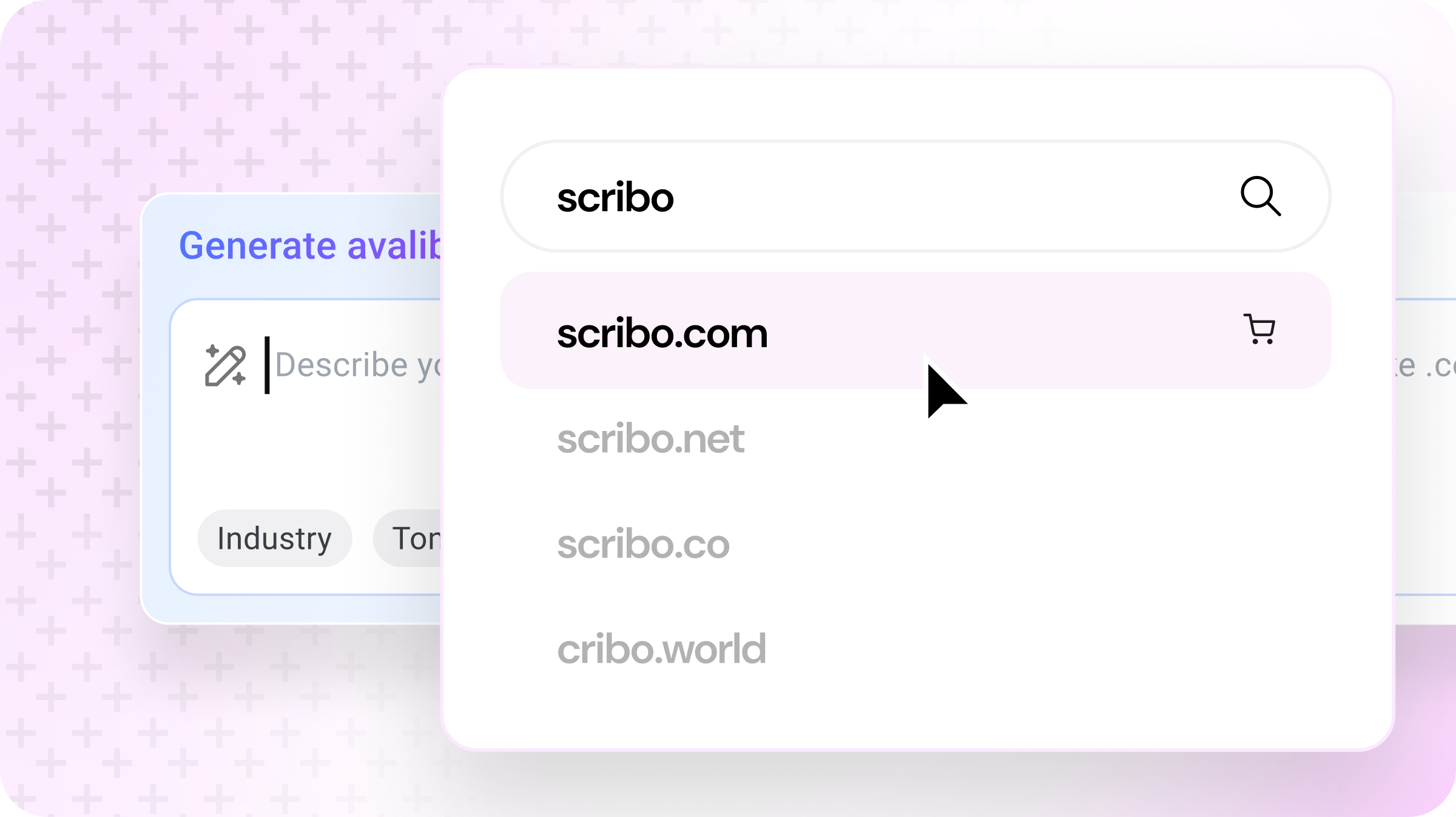

Where It All Starts
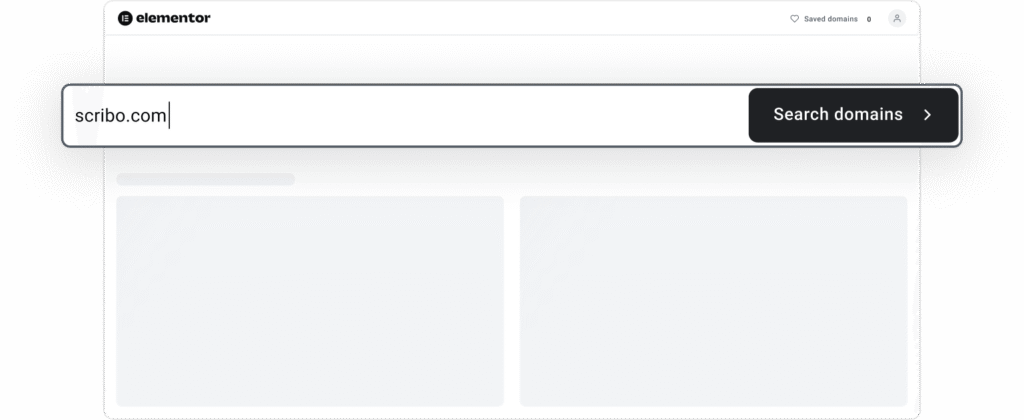
When people search for a domain name, it’s rarely just a technical step. It’s personal.
It usually means they’re about to start something: a business, a brand, a side project. And most of them arrive with one name already in mind.
This post zooms in on one part of a much bigger project that spans the full domain journey, from search to management, DNS, and checkout. I’m focusing on the search experience because it’s where most users start, and where we encountered some of the most interesting and high-impact design challenges.
The Moment Things Get Hard
Here’s the hard part: the name people want is often taken.
Recent data backs this up. According to eNom, users perform an average of 2.6 searches per session, and 53% of searches for legacy domains (.com, .net, etc.) return unavailable. Even newer top-level domains like .tech or .studio aren’t much better. 44% of those searches also hit a dead end.
That “domain taken” moment is more than just a message. It’s friction. And for many users, it’s where momentum stalls.
So our challenge was clear:
How do you keep the domain search experience simple and supportive, even when users don’t get what they came for?
That question pushed us to rethink not just the interface, but also the role of AI in the journey.
AI Isn’t the Starting Point
There’s a lot of excitement around AI-first experiences right now, and for good reason. The technology is powerful, flexible, and constantly improving. But just because we can lead with AI doesn’t always mean we should.
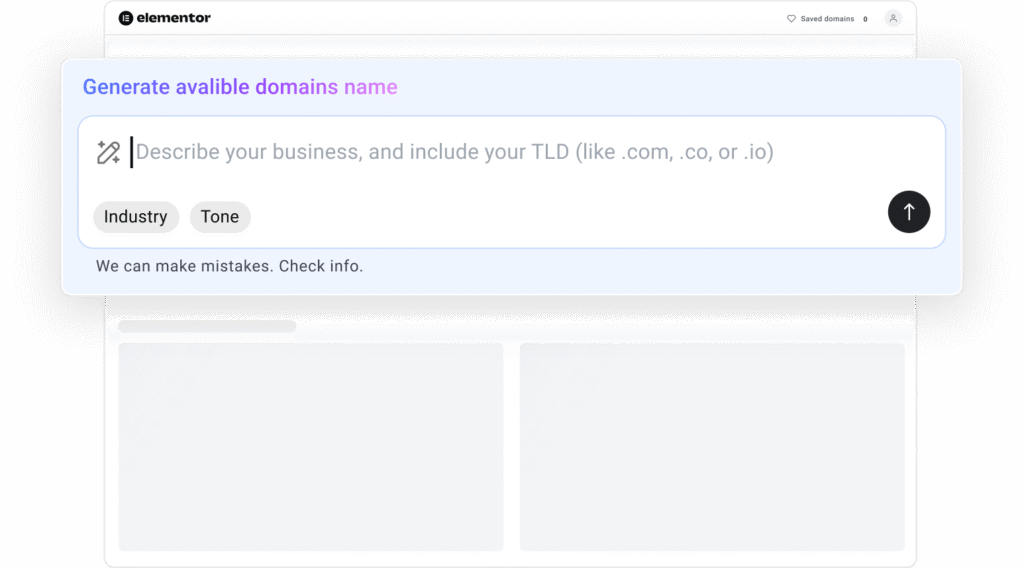
We ran user testing to explore what it would look like to make AI the entry point to domain search. We imagined users landing on a prompt-style bar that instantly suggested creative, AI-generated domain names.
The result wasn’t what we expected.
Many users didn’t immediately understand what the prompt bar was for. Some didn’t realize they could type into it at all. And for those who came with a specific name in mind, which was most users, it felt like an unnecessary detour. Too early. Too noisy.
That’s when we realized something simple but important:
AI isn’t valuable because it’s there. It’s valuable when it shows up at the right moment, with the right purpose.
For us, that moment came after users tried their idea and hit a wall. That’s when AI could step in, not to impress, but to help.
This shift, from AI-first to AI-timed, became a key design principle.
Designing the “Taken” Moment as a Turning Point
Since more than half of initial searches return unavailable, this moment became the most critical part of the experience.
We didn’t want it to feel like failure. Instead, we treated it as a pivot point, an opportunity to help users keep moving without forcing a new direction.
That’s where the prompt bar enters the flow.
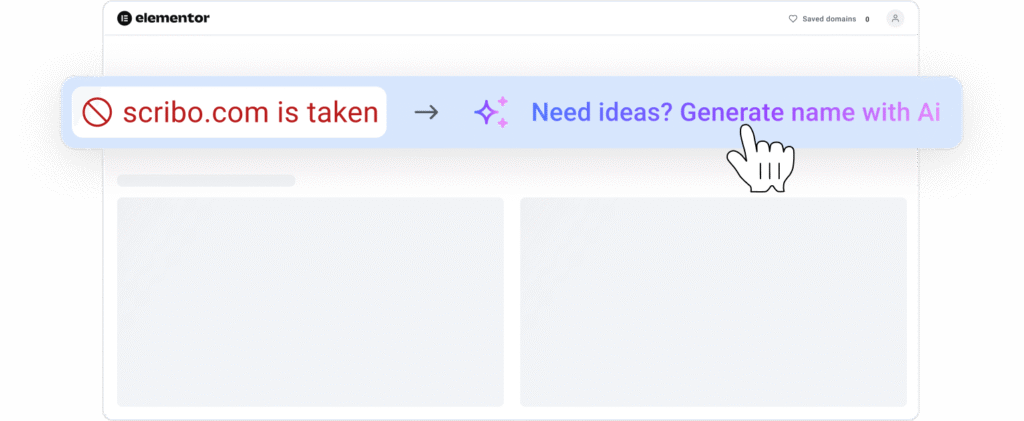
After the first search, if the domain is unavailable, we introduce the prompt bar below the results with a gentle nudge:
“Domain is taken. Need ideas? Generate a name with AI.”
The tone, timing, and placement were all intentional. It’s not a full-screen takeover. It doesn’t interrupt the experience. It’s a quiet next step that appears only when users are ready to explore alternatives.
Rather than replacing the original intent, it supports it.
What We’re Watching Next
Now that the experience is live, we’re closely observing how users interact with it. The questions guiding us are simple:
- Do users turn to AI when their first idea doesn’t work?
- Do AI suggestions help them regain momentum?
These insights will guide how we continue to evolve the experience, from refining copy to adjusting timing and making suggestions feel even more aligned with the user’s original idea.
Because even the best design needs to adapt once it meets real behavior.
Final Thought
Domain search is full of possibility, but also full of friction.
Our job isn’t just to return results. It’s to help people keep going when their first idea doesn’t work out.
When things get hard, showing the right next step at the right time helps users feel supported.
That’s what we aimed to design here: a small, thoughtful intervention that gives people room to adapt, regain momentum, and move forward.
